

Suffering an injury can be one of the most challenging things an athlete can go through. When competing at an extremely high level, or even at a social level, injuries are unfortunately common. This blog provides a background on injuries and uses a hamstring strain as an example of a return to sport process.
Injury statistics
According to the Australian Institute of Health and Welfare,about 66,500 sports injuries led to a hospital stay in Australia in 2020. There were more than twice as many cases of sports injury hospitalisation for males (47,000) than for females (19,500), with the most common age group being 15-19 year olds (Australian Institute of Health and Welfare, 2020). This doesn’t account for less serious injuries that don’t require hospitalisation. In just over half of all sports injury hospitalisations in 2020–21, the main injury was a fracture (53% or 35,100). Soft–tissue injuries were the next most common (17% of cases or 11,100)(Australian Institute of Health and Welfare, 2020).
Acute injuries
Injuries can occur in all aspects of life, from accidents at work to motor vehicle crashes, trauma and of course through sport. Acute injuries are described as injuries that occur to previously normal tissue, where the force exerted at the time of injuries on the tissues exceeds the strength of that tissue. Acute injuries can occur in bone, cartilage, ligament, muscle, etc. Some common types of injuries are sprains, dislocations and fractures. For this blog post we will use a grade 2 hamstring strain as an example of the rehabilitation process, but be aware that all injuries are different, and may require different management techniques.

Acute injury management
After an injury occurs, immediate medical attention may be required and possibly medical imaging to determine the severity of the injury. A physiotherapist and/or GP are the ideal professionals to seek advice from post-injury. For a grade 2 hamstring strain, the initial phase goals are to prevent motion loss, protect healing tissue and minimise muscle strength loss and atrophy. It is common to ice the site of injury, use a stationary bike (if tolerate) to maintain your range of motion. For the injured athlete to progress to the next stage, it is necessary to maintain a normal walking stride without pain and pain-free isometric contractions against a 50-75% resistance.
The objectives of the second stage are to restore pain-free strength in the hamstrings throughout the entire range of motion and to enhance mobility and speed in preparation for functional activities. The goal of this stage is to increase more eccentric or muscle lengthening based movements including stiff legged deadlifts, Nordic hamstring curls, and split squats. To progress to stage 3, there must be full strength 5/5 isometric knee flexion contraction and a pain free jog forward and backwards.
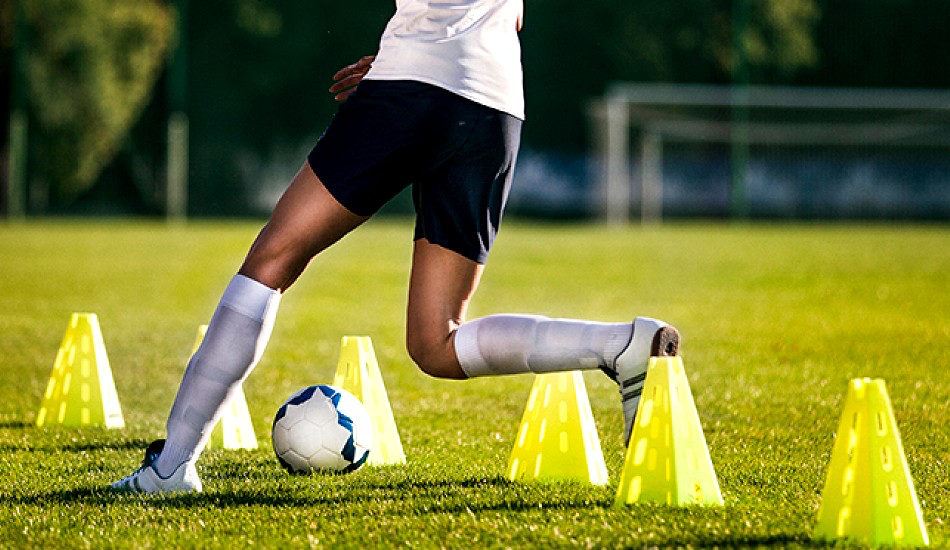
The goals for Stage 3 include being symptom-free during all tasks, achieving normal strength across the full range and speed, and incorporating postural control into sport-specific actions. This stage involves strengthening, plyometric drills and acceleration/deceleration drills.
Return to sport
The goals for a return to sport generally include the following: full strength without pain in the lengthened state testing position, full range of motion without pain, and a replication of sport-specific movements at competition speed with no symptoms.
If an athlete returns to sport before they are ready, it increases the risk of reinjury. Another aspect that requires important attention is the athlete’s mental health. Although they may be physically ready to return to sport, their confidence may have suffered depending how the injury occurred and how their recovery process went. After suffering an injury, it is very common for people to suffer depression, anxiety and even post-traumatic stress disorder (Kellezi et al. 2017).
The process for a hamstring strain – or any injury – is best managed by a physiotherapist or exercise physiologist, who can give the athlete an individualised plan. As stated, injuries are very common even at a social sporting level, so it is important when an injury occurs to be proactive, get treatment early and take the rehabilitation process seriously.
References
Australian Institute For Health and Welfare. (2020) Hospitalised sports injury in Australia. ISSN: 2205-510X. Date Accessed: 19th January 2023
Physiopedia. (2023, January 10). Hamstring Strain Retrieved February 9, 2023 from https://www.physio-pedia.com/index.php?title=Hamstring_Strain&oldid=324982.
Kellezi B, Coupland C, Morriss R, Beckett K, Joseph S, Barnes J, Christie N, Sleney J, Kendrick D. The impact of psychological factors on recovery from injury: a multicentre cohort study. Soc Psychiatry Psychiatr Epidemiol. 2017 Jul;52(7):855-866. doi: 10.1007/s00127-016-1299-z. Epub 2016 Nov 1. PMID: 27803978; PMCID: PMC5504249.